
Table of Contents
- Why Meal Planning Can Help You Save Money
- Start With One Week at a Time
- Build Your Shopping List From What You Already Have
- Use Sales and Your Existing Food Together
- Choose Simple Repeatable Meals
- Batch Cooking Basics
- Use Leftovers on Purpose
- Beginner Meal Planning Mistakes to Avoid
- Illustrative Example: Comparing an Unplanned Week and a Planned Week
- How Meal Planning Fits Into a Bigger Money Plan
- Beginner Meal Planning Checklist
Disclaimer: This article provides general educational information about budgeting and meal planning. It is not financial advice. Your food choices, budget, and personal situation are unique, so use this information as a starting point and make decisions that fit your needs.
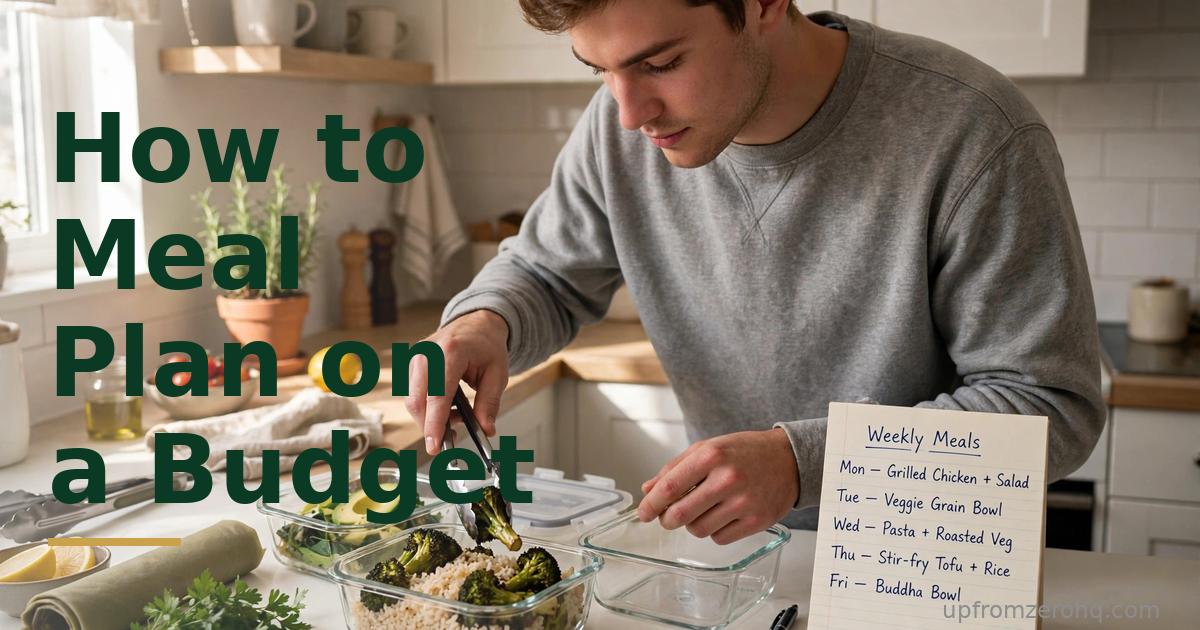
Meal planning does not have to mean complicated recipes, hours in the kitchen, or eating the same thing every day. For beginners, meal planning is simply deciding ahead of time what you are going to eat, what you need to buy, and how you will use the food you already have.
A simple meal plan can help you become more intentional with your grocery spending because you are making decisions before you are hungry, rushed, or ordering something at the last minute.
Meal planning is also a budgeting skill. Your food budget is one part of your overall spending plan, just like housing, transportation, and savings.
If you are building your first budget, start here: How To Create A Budget For The First Time
Why Meal Planning Can Help You Save Money
Food spending can become difficult to control when every meal is decided at the last minute. Without a plan, it is easier to buy items you do not need, forget food you already have, or waste ingredients before using them.
Meal planning changes the process.
Instead of asking, “What should I eat today?” you answer a different question:
“What meals can I prepare this week with the money and ingredients I already have?”
A basic meal plan helps you:
- Know what you need before shopping
- Reduce unnecessary purchases
- Use ingredients more than once
- Make fewer rushed food decisions
- Plan around your actual schedule
Meal planning works best when it becomes part of a larger money system. Understanding your spending categories can help you see where food fits into your monthly plan.
Learn more about organizing spending categories: Budget Categories
Start With One Week at a Time
One of the biggest beginner mistakes is trying to plan an entire month of meals immediately.
Start with one week.
A weekly plan is easier because:
- Your schedule can change
- Food stays fresher
- You can adjust what works and what does not
- Grocery shopping feels more manageable
A simple weekly planning routine can look like this:
- Check your schedule for the week.
- Look at what food you already have.
- Choose a few meals you can repeat.
- Build your shopping list.
- Prepare anything that makes future meals easier.
The goal is not perfection. The goal is having a plan before you spend money.
Build Your Shopping List From What You Already Have
Before making a grocery list, check your kitchen.
Look at:
- Pantry items
- Frozen foods
- Refrigerator items
- Leftovers
- Ingredients that need to be used soon
Many people make the mistake of planning meals first and shopping second. A better approach is to start with what you already own.
For example, if you already have rice, pasta, canned foods, or frozen ingredients, your shopping list can focus on what completes those meals instead of replacing everything.
This same idea applies to your overall finances. Knowing what you already have helps you make better decisions with limited resources.
For more beginner budgeting guidance: The 50 30 20 Budget Rule A Beginners Complete Guide
Use Sales and Your Existing Food Together
Meal planning does not require buying whatever is cheapest without a purpose. The goal is to combine what is available with what you already need.
A simple approach:
- Check what items are available at a lower cost.
- Choose meals that use those ingredients.
- Avoid buying items just because they seem like a good deal.
- Make sure you have a plan to use what you buy.
A lower-cost item that gets wasted is not actually helping your budget.
Choose Simple Repeatable Meals
Beginners often make meal planning harder than it needs to be.
You do not need seven completely different dinners every week.
A simple meal plan might include:
- A few breakfast options
- A few lunch options
- A few dinner options
- Snacks or small meals that fit your routine
Repeatable meals make shopping and cooking easier.
Examples of simple meal ideas:
- A protein with a side and vegetables
- Rice bowls with different toppings
- Pasta meals with different ingredients
- Sandwiches or wraps
- Breakfast meals that can be prepared ahead
The goal is creating a system you can continue using.
Batch Cooking Basics
Batch cooking means preparing multiple portions of food at one time so future meals require less work.
You do not have to cook every meal for the entire week in one session.
Beginner batch cooking can be as simple as:
- Preparing extra portions during a normal meal
- Cooking a larger amount of one ingredient
- Preparing ingredients ahead of time
- Portioning food so it is ready when needed
The best batch cooking plan is one that matches your schedule.
If cooking everything at once feels overwhelming, start smaller.
Use Leftovers on Purpose
Leftovers should not be an accident. They should be part of the plan.
Instead of thinking of leftovers as extra food, think of them as a future meal you already paid for.
Ways to use leftovers:
- Make enough dinner for another meal
- Use extra ingredients in a different meal
- Store portions for busy days
- Plan a leftover meal day
A leftover plan can help reduce food waste and make busy days easier.
Beginner Meal Planning Mistakes to Avoid
Buying Too Much Fresh Food
One common mistake is buying more fresh ingredients than you can realistically use.
Before buying perishable items, ask:
- When will I use this?
- How many meals does it support?
- Will I realistically prepare it?
A smaller plan you actually follow is better than a large plan that creates waste.
Choosing Meals That Are Too Complicated
A meal plan that requires too much effort is harder to maintain.
Start with meals you know you can prepare.
You can always add more variety later.
Ignoring Your Schedule
Your meal plan should match your real life.
If you know certain days are busy, plan easier meals for those days.
Illustrative Example: Comparing an Unplanned Week and a Planned Week
This example is for illustration only. These are simple illustrative numbers, not recommendations and not predictions of actual costs.
Imagine a person looks at one week of food spending.
Without a meal plan:
- Unplanned food spending for the week: 100 units
With a simple meal plan:
- Planned food spending for the week: 60 units
Conceptually, the difference is 40 units staying in the budget because the person created a plan before spending.
The purpose of this example is to show how planning can change spending decisions. The numbers are only simple examples and do not represent what anyone should spend or what actual costs will be.
How Meal Planning Fits Into a Bigger Money Plan
Meal planning is one small part of managing your money.
If you are trying to reduce financial stress, start by understanding where your money goes and creating systems that make good decisions easier.
More beginner resources:
How To Save Money How To Save Money On A Low Income How To Stop Living Paycheck To Paycheck How To Build An Emergency Fund
Beginner Meal Planning Checklist
Before each week begins:
- Check your schedule
- Review food you already have
- Choose simple meals
- Create a shopping list
- Buy only what supports the plan
- Prepare ingredients when helpful
- Plan how leftovers will be used
Meal planning is not about making every meal perfect. It is about creating a repeatable habit that helps you make intentional choices with your money and your time.
For more beginner money topics: Getting Started From Zero Budget Deep Dive
Free Download
Get the From-Zero Money Reset — free
A simple one-page worksheet to find your breathing room, set up your 3 buckets, and automate one thing — in 10 minutes flat. Enter your email and I will send it immediately.
No spam. Unsubscribe any time. Plain-English money tips only.